Types of data analytics help businesses and individuals understand data in different ways to make smarter, more informed decisions. In today’s digital world, data is generated every second, from social media activity to online purchases, and knowing how to analyze this data effectively can give a strong advantage.
From analyzing past performance to predicting future trends, each type of data analytics plays a unique role. Instead of relying on guesswork, organizations now use data to guide their strategies, improve performance, and understand customer behavior more deeply.
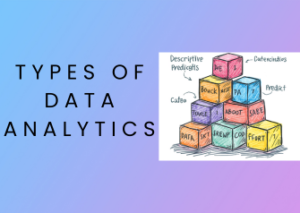
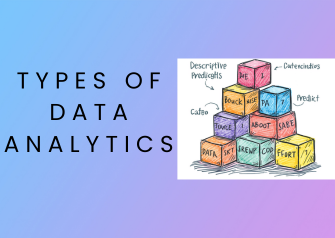
So, what are the main types of data analytics? The four key types are descriptive analytics, diagnostic analytics, predictive analytics, and prescriptive analytics. Each type answers a different question:
- What happened?
- Why did it happen?
- What might happen next?
- What should be done?
These questions form the foundation of data-driven decision-making.
In this guide, you’ll learn all the major types of data analytics in a simple and easy-to-understand way. We’ll also look at practical examples so you can clearly see how each type works in real life.
What Are the Types of Data Analytics?

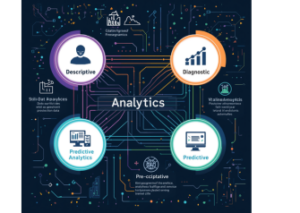
The types of data analytics are commonly divided into four main categories:
- Descriptive analytics
- Diagnostic analytics
- Predictive analytics
- Prescriptive analytics
Each of these types builds on the previous one. Together, they create a complete framework for understanding data from analyzing past results to making future decisions.
Think of it like a journey:
- First, you understand what happened
- Then, you figure out why it happened
- Next, you predict what might happen
- Finally, you decide what action to take
This step-by-step approach helps businesses and individuals move from basic insights to advanced strategies.
Descriptive Analytics (What Happened?)
Descriptive analytics is the most basic and widely used type of data analytics. It focuses on analyzing historical data to understand what has already happened.
Instead of making predictions or recommendations, descriptive analytics simply summarizes data and presents it in an understandable way.
Key Points:
- Uses past or historical data
- Identifies trends and patterns
- Displays data through reports, dashboards, and charts
- Provides a clear snapshot of performance
Why It Matters:
Descriptive analytics helps organizations track progress and measure performance. Without it, there would be no clear understanding of past outcomes.
For example:
- A website tracks daily visitors
- A business monitors monthly revenue
- A social media page analyzes engagement
These insights form the foundation for further analysis.
Diagnostic Analytics (Why Did It Happen?)
While descriptive analytics tells you what happened, diagnostic analytics explains why it happened. It digs deeper into the data to uncover causes and relationships.
This type of analytics is essential for problem-solving and identifying the root cause of issues.
Key Points:
- Identifies reasons behind outcomes
- Uses comparisons, correlations, and data exploration
- Helps find patterns and connections
- Supports decision-making by explaining results
Why It Matters:
Understanding the why behind data is crucial. Without this step, businesses may make incorrect assumptions and poor decisions.
For instance:
- If website traffic drops, diagnostic analytics can reveal whether it’s due to SEO issues or technical problems
- If sales increase, it can identify whether it’s due to marketing campaigns or seasonal demand
By identifying root causes, organizations can fix problems and improve performance.
Predictive Analytics (What Might Happen?)
Predictive analytics focuses on forecasting future outcomes using historical data, patterns, and statistical models. It helps organizations anticipate trends and prepare for what’s coming next.
This type of analytics is widely used in industries where planning and forecasting are critical.
Key Points:
- Uses historical data to predict future outcomes
- Applies statistical models and algorithms
- Identifies patterns and trends
- Helps in planning and forecasting
Why It Matters:
Predictive analytics helps businesses stay ahead of the competition by making proactive decisions instead of reactive ones.
Common uses include:
- Forecasting sales
- Predicting customer behavior
- Identifying potential risks
- Planning inventory
For example, companies can predict demand for products and ensure they have enough stock available, reducing both shortages and waste.
Prescriptive Analytics (What Should Be Done?)
Prescriptive analytics is the most advanced type of data analytics. It not only predicts future outcomes but also recommends actions to achieve the best results.
It combines data analysis with advanced technologies like artificial intelligence (AI) and machine learning.
Key Points:
- Suggests recommended actions
- Uses AI and advanced algorithms
- Helps optimize decisions
- Focuses on achieving the best possible outcome.
Why It Matters:
Prescriptive analytics helps organizations make smarter and more efficient decisions by providing clear recommendations.
Examples include:
- Recommending pricing strategies
- Optimizing supply chains
- Personalizing customer experiences
- Automating decision-making processes
This type of analytics is especially valuable in complex environments where multiple factors need to be considered.
Difference Between the Types of Data Analytics
| Type | Key Question | Focus |
|---|---|---|
| Descriptive Analytics | What happened? | Past |
| Diagnostic Analytics | Why did it happen? | Cause |
| Predictive Analytics | What might happen? | Future |
| Prescriptive Analytics | What should be done? | Action |
This table clearly shows how each type of data analytics serves a different purpose. Together, they create a complete data analysis process.
Why Understanding Types of Data Analytics Matters
Understanding the different types of data analytics is important for both businesses and individuals. It helps turn raw data into meaningful insights and actionable strategies.
Better Decision-Making
Instead of relying on assumptions, decisions can be based on real data and insights.
Effective Problem-Solving
By identifying root causes, organizations can solve problems more efficiently.
Future Planning
Predictive insights allow businesses to prepare for upcoming trends and challenges.
Improved Performance
By analyzing and optimizing processes, organizations can increase efficiency and productivity.
Competitive Advantage
Businesses that use data analytics effectively can outperform competitors and adapt quickly to changes.
Each type of analytics adds value, moving from simple understanding to advanced decision-making.
Real-Life Applications of Data Analytics Types
Data analytics is used in almost every industry today. Here are some real-life applications:
Marketing

Businesses use data analytics to understand customer behavior, run targeted campaigns, and improve engagement.
Healthcare
Doctors and hospitals analyze patient data to diagnose diseases, improve treatments, and enhance patient care.
Finance
Financial institutions use analytics to detect fraud, manage risks, and make investment decisions.
E-commerce
Online stores use analytics to recommend products, personalize user experiences, and increase sales.
Education
Institutions analyze student performance data to improve learning outcomes and teaching methods.
These examples show how data analytics is shaping the modern world.
Conclusion
The types of data analytics—descriptive, diagnostic, predictive, and prescriptive—work together to transform raw data into valuable insights. Each type plays a unique role, from understanding past performance to guiding future decisions.
Descriptive analytics helps you understand what happened, diagnostic analytics explains why it happened, predictive analytics forecasts what might happen next, and prescriptive analytics recommends what actions to take.
By learning and understanding these types, you can gain a clearer view of how data is used in real life. Whether you are a student, professional, or business owner, mastering data analytics can help you make smarter decisions and achieve better results.
As the world becomes more data-driven, the importance of understanding the types of data analytics will only continue to grow.
Frequently Asked Questions
What are the types of data analytics?
The four main types of data analytics are descriptive analytics, diagnostic analytics, predictive analytics, and prescriptive analytics.
What is descriptive analytics?
Descriptive analytics focuses on analyzing past data to understand what has already happened.
What is predictive analytics used for?
Predictive analytics is used to forecast future trends and outcomes based on historical data.
Which type of data analytics is most advanced?
Prescriptive analytics is the most advanced as it recommends actions based on data insights.