The data analytics process is the foundation of turning raw data into meaningful insights. Whether you’re a beginner or a professional, understanding the steps in data analytics helps you make better, data-driven decisions.
A well-defined data analysis process ensures that your work is structured, accurate, and easy to interpret. Instead of guessing, you follow a clear workflow that leads to reliable results. In this guide, you’ll learn the complete step-by-step process in a simple and practical way.
What is the Data Analytics Process?
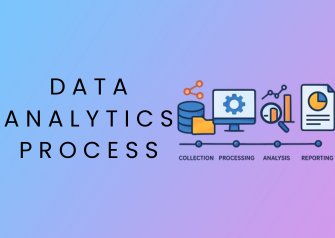
The data analytics process is a systematic approach to collecting, organizing, analyzing, and interpreting data to extract useful insights.
It is not just about looking at numbers it’s about following a structured workflow that transforms raw data into actionable decisions. This process is used across industries to solve problems, improve performance, and plan future strategies.
Why Following a Structured Data Analysis Process Matters
Following a clear data analysis process is important for several reasons:
- It reduces errors and improves accuracy
- It ensures consistency in your work
- It helps you stay focused on the objective
- It makes insights more reliable and actionable
Without a proper structure, data analysis can become confusing and lead to incorrect conclusions.
Steps in Data Analytics (Step-by-Step Workflow)
Below are the essential steps in data analytics that form a complete workflow:
1. Define the Problem or Objective


Every successful data analytics process starts with a clear objective.
Ask yourself:
- What problem am I trying to solve?
- What questions need answers?
Defining the goal helps you stay focused and ensures that your analysis is relevant.
2. Data Collection
Once the objective is clear, the next step in the data analysis process is collecting relevant data.
This includes gathering accurate and complete information that aligns with your goal. The quality of your analysis depends heavily on the quality of your data.
3. Data Cleaning

Raw data often contains errors, missing values, or duplicates.
In this step:
- Remove incorrect data
- Handle missing values
- Fix inconsistencies
Clean data is essential for producing reliable results in the data analytics process.
4. Data Transformation
After cleaning, data needs to be structured properly.
This step involves:
- Organizing data into a usable format
- Filtering unnecessary information
- Preparing it for analysis
A well-structured dataset makes analysis easier and more effective.
5. Data Analysis
This is the core of the steps in data analytics.
Here, you:
- Identify patterns and trends
- Compare different variables
- Answer the questions defined earlier
This step converts data into meaningful insights.
6. Data Interpretation
Analysis alone is not enough you must understand what the results mean.
In this step:
- Interpret findings in context
- Connect results to your objective
- Identify key insights
This is where data starts delivering real value.
7. Data Visualization and Communication

To make insights useful, they must be clearly presented.
This involves:
- Creating simple visual representations
- Explaining findings in an easy-to-understand way
Clear communication ensures that others can understand and act on your insights.
8. Decision-Making
The final step in the data analytics process is taking action based on insights.
This includes:
- Solving problems
- Improving strategies
- Making informed decisions
Without this step, the entire process loses its purpose.
Key Challenges in the Data Analytics Process
Even with a structured workflow, some challenges can arise:
- Poor data quality
- Lack of clear objectives
- Misinterpretation of results
- Inconsistent process
Being aware of these challenges helps you avoid common mistakes.
Best Practices for an Effective Data Analysis Process
To get the best results from the data analysis process, follow these best practices:
- Start with a clear and specific goal
- Ensure your data is accurate and complete
- Follow each step in order
- Keep your analysis simple and focused
- Communicate insights clearly
Conclusion
The data analytics process is a step-by-step journey that transforms raw data into actionable insights. By following the proper steps in data analytics, you can ensure your work is accurate, structured, and impactful.
A well-defined data analysis process not only improves decision-making but also helps you gain deeper insights and achieve better results. Mastering this workflow is essential for anyone working with data.
FAQs
What is the data analytics process?
The data analytics process is a structured workflow used to collect, clean, analyze, and interpret data to generate insights.
What are the steps in data analytics?
The main steps in data analytics include defining objectives, data collection, cleaning, transformation, analysis, interpretation, visualization, and decision-making.
Why is the data analysis process important?
The data analysis process ensures accuracy, consistency, and better decision-making by following a structured approach.
How long does the data analytics process take?
The time required depends on the complexity of the problem and the size of the data, but following a structured process helps improve efficiency.